Pinocchio and Lucignolo Begin Their Transformation into Donkeys
Pinocchio (Tania Zamorsky Edition)Pinocchio and Lucignolo Begin Their Transformation into Donkeys marks the moment when Toyland’s promise of carefree amusement turns into bodily consequence. After five months without books or school, Pinocchio wakes to find donkey ears growing from his head; soon he and Lucignolo discover the same affliction, and their laughter gives way to the first unmistakable stages of becoming animals. The transformation makes visible what their long holiday had concealed: their rejection of study and the pull of a bad companion have begun to alter them in ways they cannot laugh off or control.
Toyland and the Long Holiday
Toyland is presented as a place inhabited entirely by boys, from eight years old to fourteen. Its streets are a noisy succession of games and spectacles: boys play ball and blindman’s buff, ride bicycles and wooden horses, perform tricks, sing, shout, and run about. Canvas theaters draw crowds from morning to night. The walls carry charcoal slogans against school, written with conspicuous misspellings. The setting’s disorder is not incidental background; it gives the boys’ rejection of lessons a whole environment in which to flourish.
Pinocchio and Lucignolo arrive with the other boys who traveled with the Little Man and plunge into the city’s commotion, quickly becoming friends with everyone. Their days of amusement pass so swiftly that hours, days, and weeks seem to flash by. Pinocchio repeatedly tells Lucignolo how good their life is. Lucignolo, in turn, presents the escape as a service he has done for his friend: he reminds Pinocchio that he once intended to go home to the Fairy and study, then credits his own advice and care for freeing him from books and school. Pinocchio accepts this account warmly, embracing and kissing him. The friendship is affectionate, but its direction is clear: Lucignolo’s influence helps keep Pinocchio away from the life he had meant to resume.
The First Visible Sign
After five months of spending whole days at play without seeing a book or a school, Pinocchio wakes one morning in a bad temper and scratches his head. The ordinary gesture reveals the change: his ears have grown more than a span. Since his birth, they had been so small they were barely visible; now, reflected in the water he has poured into a washbasin because he cannot find a mirror, they appear as a conspicuous pair of donkey ears.
Pinocchio’s response is physical and immediate. He cries, shouts, and beats his head against the wall, but his distress coincides with further growth: the ears lengthen and grow furry toward their tips. A female marmot who lives upstairs enters after hearing his cries and asks what is wrong. She feels his pulse and identifies his condition as donkey fever. She explains that within two or three hours he will no longer be a puppet or a boy, but a real donkey of the kind used to pull carts and carry vegetables to market. The change is therefore not merely an embarrassing appearance; it is the beginning of a rapid transformation with a plainly stated outcome.
The marmot describes the affliction as the fate of boys who grow weary of books, schools, and teachers and spend their days at play instead. Pinocchio initially tries to place the blame on Lucignolo. He says he had wanted to go home, obey, continue studying, and distinguish himself, but that Lucignolo persuaded him to come to Toyland, where the boys would play from morning to night. Under the marmot’s questioning, however, Pinocchio also acknowledges his own lack of judgment and heart. He regrets leaving the Fairy, who loved him like a mother, and recognizes that he might otherwise have become a well-behaved boy. His fear turns into anger at Lucignolo, whom he sets out to find.
Shared Affliction
Pinocchio searches the streets, squares, and theaters but cannot find his friend. When he eventually reaches Lucignolo’s room, he sees him wearing a large cotton cap pulled down over his face, just as Pinocchio has concealed his own ears beneath a cap. The matching disguise makes Pinocchio suspect that Lucignolo has the same fever. Their recognition is delayed by shame: each has tried to hide the evidence from public view.
They agree to reveal their heads together. Pinocchio counts aloud, and at three both throw their caps into the air. The ears are now so conspicuously enlarged that the boys can see the same misfortune in one another. Instead of remaining mortified, they wink at their ears and break into a loud, prolonged fit of laughter. The scene briefly turns the bodily change into a shared joke, as if their companionship could make the consequence harmless.
That reprieve lasts only until Lucignolo suddenly stops laughing. He staggers, changes color, and calls for help because he can no longer remain upright. Pinocchio soon finds that he cannot stand either. Both drop to all fours and begin circling and running around the room on their hands and feet. As they move, their arms become forelegs, their faces lengthen into muzzles, and their backs acquire light grayish fur flecked with black. The transformation advances through their bodies in stages, each change making their former human shape less tenable.
Consequence and Significance
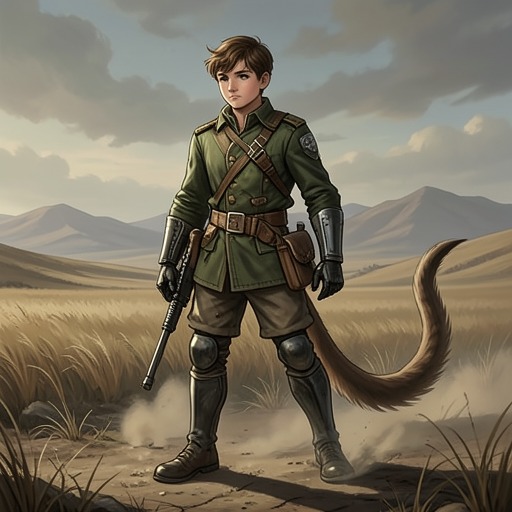
The most humiliating stage, as the narration identifies it, is the growth of a tail. At that point, the boys are overcome by shame and pain and try to cry and lament their fate. The contrast with their earlier laughter is stark: the ears had seemed ridiculous enough to make them laugh together, but the spread of the change through limbs, faces, backs, and finally the tail makes the cost impossible to dismiss as a joke.
The scene also complicates Pinocchio’s first attempt to blame Lucignolo. Lucignolo’s persuasion is central to the chain of events, and Pinocchio recalls precisely what he was urged to abandon: returning to the Fairy, obeying, and studying. Yet Pinocchio himself admits that he chose to follow the advice. The transformation thus gives physical form to both bad influence and personal responsibility. Toyland’s apparently endless freedom has not removed consequences; it has delayed their appearance until they arrive on the boys’ own bodies. By the end of this episode, Pinocchio and Lucignolo have not merely discovered that they are ill. They have begun to lose the bodily distinction between boys and donkeys, and their shared misadventure has crossed from play into irreversible-seeming change.